It’s Complicated
November 10, 2015
“I’m stuffed, man.”
“Yeah?”
“Yeah.”
Rocky swung out of the dumpster and sat down on the curb next to his friend before finishing his cheese paper.
“That’s gross.”
“What’s gross?”
“You are. Eatin’ that crap.”
Rocky glared at Lamont. “First of all, you do not know me to talk to me like that.”
Then he swept his arm back to the dumpster while doing a horrible curtsy.
“Besides, we are eating out of a dumpster, your highness, everything we are eating is crap.”
They both laughed and nodded as they finished up their dinner.
Lamont scanned the parking lot. “Where’s your old lady?” he asked.
Unfazed, Rocky answered. “She’s over by the taco place. She mixes up ‘whatever’ for the kids and calls it ‘chili’.”
Lamont nodded. “We gotta get past this.”
A cold wind kicked up some leaves in the parking lot.
“Hope so.” whispered Rocky
The back door of the restaurant swung open and out came the bar music along with one of the kids from the restaurant. Rocky and Lamont stepped behind the landscaping hedge and watched the restaurant kid wrestle some more garbage from his trash barrel up onto the dumpster pile. They kept low and waited until he was done dancing the barrel back into the restaurant. They listened for the door to slam and the quiet to return before they hit the dumpster again to stuff what they could find into a couple of old “to go” bags. “Take Out Again” bags was Rocky’s label for them.
“Where’s your old lady?” Rocky asked.
Lamont nibbled on a fry. “Not sure. Maybe her Mom’s.”
Rocky stopped digging and stared as he washed some apple slices in an iced tea cup.
“It ain’t much” Lamont said. “We just got some issues, you know.”
“Holler if you need help, man.”
“I will Rock Man, but, look around, we are eating out of a dumpster for real. That ain’t right. Just take care of the babies. We’re good.”
“Where you heading tonight?”
“I don’t know – that wind is cold though. Maybe I’ll stop by Trixie’s trailer.”
“You are slick.”
“Naw, I’m just resourceful, baby.”
“Stop by my place tomorrow, ok?”
“All right. Later. Take care of those twins now, ok?
–
Rocky listened to the murder of crows fussing nearby the next morning. The twins were wrestling and somersaulting with each other near the foot of his bed. He felt the chill in the air as he watched the kids. “Winter’s coming” he thought and then shivered thinking how he would provide for Rhonda and the kids with the Witch of November arriving soon.
Rhonda stood at the foot of the bed. “That loser is here again.” she whispered.
Rocky sat up and rubbed his eyes. “Why are you always harshing on Lamont?”
“He’s a loser.”
“No he’s not.”
“Yes he is. He’s a snake. A weasel. I do not want him around my kids.”
“Will you stop? He’s out there playing with them right now.”
Horrified, she ran outside and called the twins over to her. The kids protested and begged to play with Uncle Lamont. He picked up one and held hands with the other one as all three walked over to Mom.
“Rockin’ Rhonda,” he hissed, “how you been, Baby?”
“Get away from me Lamont. And stay away from my damn kids.”
Lamont held his cap in both hands.
“Rhonda, words cannot express how much you and the twins mean to me and Lucy.” His eyes glistened, “Especially since we have not been blessed with our own all these years.”
“Damn, Rhonda. Leave the guy alone.” Rocky stood in the doorway and rubbed his forehead.
“I don’t want him around here, dammit!”
Rocky was about to respond when Lamont interrupted. “I got a tip on something.”
Rocky motioned for Rhonda to leave and then offered Lamont a seat. “A ‘tip’? What kind of ‘tip’?”
Rhonda stayed in the room and crossed her arms while the kids played outside.
“The kids want Halloween costumes for tonight.” she murmured.
Rocky shot back, “They already got some damn masks.”
He nodded for Lamont to continue.
“Chickens.”
“Chickens?”
“Chickens. And Eggs.”
“Chickens and eggs?”
“Yep. Annnnnd, pie.”
“Pie?”
“Pumpkin pies.”
“Bullshit.”
“I’m for real.”
“For real?”
“Real, Babyyyy!” Lamont laughed.
Rhonda tapped her foot. “Where?”
Lamont sniffed, “I’ll show you where.”
“Rocky, he’s lying.”
“Why would he lie?”
“I don’t know, he just is. I’m just sayin’.”
“You’re just sayin’.”
“Look, I just need some help carrying all that stuff. I also need a lookout. I came to you ’cause I know you need it.”
Lamont nodded to the kids playing outside.
“Fresh chicken.” Rocky said aloud.
“I don’t know.” said Rhonda.
“Eggs too.”
“And pie.”
“Beats the dumpsters.”
“What if we get caught?” Rhonda was not sure.
“No one to catch us. It’s that farm by the bridge. They have the apple festival thing. Are you in or not?”
“They have apples?”
Lamont nodded back to Rhonda. “Lots of them.”, he said matter-of-factly. “I can’t tell you more until we’re official partners.”
“The twins want to ‘trick or treat’ tonight.” Rhonda said to Rocky.
“Take them. Then get someone to watch them after they’re done,” interrupted Lamont “we can do this and you’ll be back home before they wake up.”
Rocky and Rhonda stared at each other.
“It’s no different than when we hit the dumpsters!”, wailed Lamont. “The people won’t be home tonight and they’re taking the dog with them – tonight’s the night.”
“Where’s your old lady?”, Rocky asked.
“That’s why I need you guys to do this. Lucy’s at her Mom’s.”
“It’s complicated.” he added.
–
Everyone agreed to meet at the bridge after the twins were done trick-or-treating. Lamont showed up a few minutes after Rocky and Rhonda.
Lamont shared his plan:
Rocky and Lamont would wait across the old highway from the henhouse. Rhonda would wait in the wooded area behind the farmhouse for their signal before showing up at the henhouse with the plastic bags for the eggs and chickens. If things were to go awry, the plan was for her to go back to the kids immediately. Rocky and Lamont were to cross the highway and stroll right into the henhouse before picking out the fattest chickens and the freshest eggs. Eggs were to be placed in Rhonda’s plastic bags after a couple of plump, broken-necked hens lined the bottoms. Everyone will then carry as much as they can back across the highway to the bridge where everything would be divided up and enjoyed. No dumpster diving on Halloween!
–
Rocky sat on the bridge rail and watched two crows pulling stringy innerds from a pathetic little squirrel.
“Poor bastard.”
Lamont looked over, “Just nature, baby. Everybody’s got to eat.”
Rocky kept watching, “Looks like he never had a chance.”
“He made his choices Rock Man”, we got to get moving.”
The two partners made their way to the edge of the highway.
–
Rhonda could see them on the side of the road. “No dogs, so far.” she thought. Everything was still. She shivered in the cold night. “This is crazy.”
–
The artist wanted to get home at a decent hour. The show was so-so. The interstate would probably be safer, but the highway is faster. Damn deer are all over the place at night. He figured he’d run the risk anyway. He cranked up the comedians on his satellite radio.
–
Rocky saw the van coming and pulled back into the bushes. “No dogs.”, he said to Lamont.
Lamont watched the van get closer. “Once this guy goes by, let’s cross.”, he whispered.
Rocky heard Lamont say something, “What?’, he turned to Lamont.
–
Lucy was near the dog house feeding dumpster scraps to “Killer”, the farm’s dog from a “Take Out Again” bag. She watched the highway and the farm house at the same time. No lights in the farm house. Lights coming down the highway. Another scrap through the chicken wire and she started to push up on the pin holding Killer’s pen door in place. “Any minute now, Killer”, she thought as she watched the lights.
–
The artist saw something out of the corner of his right eye, and veered a bit to the left. “What the hell?”, he said out loud.
He felt a bump on the right side of the van near the front tire. Nothing serious, but he certainly hit something.
“Don’t want to stop out here in the middle of no where.” he thought and glanced at the St. Christopher magnet on his dash.
–
Rhonda watched the lights on the road from the woods behind the house. She saw the lights move suddenly, then continue on their way down the road before she heard the dog barking. Something wasn’t right, she was confused.
–
Rocky was laying on the highway. No pain. Just a black sky and pure confusion. Lamont’s face filled his field of vision. Was Lamont wearing a Zorro mask? Happy Halloween. He could see Lamont looking his body all up and down. He tried to move and couldn’t. Couldn’t speak. So tired and cold.
–
Rhonda stood by the tree holding the “Take Out Again” bags. It was Lucy zig-zagging toward her. The dog was chasing her up the hill. The van went by to her left. She ran instinctively to her right in the dark; Lucy flew past her up the hill. Rhonda felt the dog pull her down to the cold mud as Lucy kept running. Rhonda called out and Lucy never looked back. Lights came on in the farm house. Someone stood on the porch calling for Killer. They could hear him growling and thrashing. He came down the hill later,
much later.
–
Rocky still could not move. He could see the back of Lamont’s neck in his left side. “He’s eating me!” Rocky thought as he tried to move. Lamont kept eating the soft tissue and organs in Rocky’s abdomen. It was getting harder to breathe.
Rocky eventually figured out Lamont pushed him into the van and muttered, “Why?”
“Because I’m resourceful”, replied Lamont.
He stuck his bloody face near Rocky’s. Rocky again noticed he had a mask on similar to his own.
“Happy Halloween”, Lamont chuckled.
Rocky kept trying to get one more breath. He saw his Dad waving and offering him an apple by a creek.
He waved back.
–
Lucy’s Mom’s place was up the hill from the farm house. She sat in front and waited. “It’s not my fault,” she thought “it’s not my fault”. Lucy’s Mom brought out the dishes and sat next to her daughter.
–
The road crew was always busy on Halloween. Lime green vests and litter sticks. There were always plenty of beer cans and fast food wrappers. The worst was the occasional urine-filled soda bottle. Once in a great while someone would find a body of some sort. Human bodies were never good. Find one of those along the road and your day is completely lost forever.
“Only 3 more days” thought Caillou. “3 more days of this crap and I’m done. The judge better not forget to sign this off this time.” He prodded and poked with his litter stick as he walked along the highway.
Caillou preferred to walk with his thoughts rather than other people. He found his thoughts easier to deal with than other people – especially when sobriety and all it’s demands were happening. He came up on a large raccoon carcass with half it’s side eaten away.
“God damn! That is nasty.” he thought as he stepped over the rancid heap. “If it were summer instead of damn near winter, that bitch would be stinking to high heaven.”
He looked up the road and saw some of the other litterwalkers had stopped to watch a weasel with a black mask running alongside two baby raccoons as they crossed the highway and darted up the hill. Caillou watched and then looked down at the carcass again.
“Three more days”, he repeated as he walked along looking for litter. The Witch of November winds were kicking up all morning. He stopped to bundle up better and then looked up the hill.
“That’s just not right.” he said as he quickly sipped some homemade from his flask and continued walking down the road – shaking his head slowly.
“No damn way that’s right.”

Elegant Schadenfreude
January 6, 2015
It’s cold in this awful town.
There have been days since I moved here where I step outside, breathe deep, and exclaim:
“Damn. It used to be like this almost every day in California and even most of the time in Colorado. It’s no wonder why I live here.”.
But it is not very often I say that. Very rarely actually.
Ok, I have never said it.
The forecasted high for Wednesday is -5 F. So, I am saying to you – it’s really cold here. Not an, “Oh, I might need a jacket for an after dinner walk on the wharf tonight.” kind of cold.
No.
This is a “Where are those testicles I had? I had them a minute ago, but now they’re whimpering under my armpits.” kind of cold.
Cold.
I was in the basement switching laundry, which is what all famous artists do, after all. Once I switched on the dryer, I did my ritualistic gangster hug around my furnace and begged it to not die this winter. Then I noticed the shutoff valve for the outside faucet. It is up in the basement ceiling nestled among the insulation, cobwebs, and dead spiders in the corner behind my furnace – that I love and do not want to replace.
As many of you know, my most profound influences as an artist include primarily Marcel Duchamp, Matisse, some Cubists, the Fauves, early blues music/lyrics and early African and African-American cultural traditions and stories. I forgot to mention another influence that rounds out what I do. Warner Brothers cartoons, especially from the 1950’s – and more importantly: Charles Addams cartoons and drawings, (https://www.pinterest.com/18macgilpa/charles-addams-cartoonsthe-addams-family/ ) as a kid, I rolled laughing at the tv show. I laughed out loud every time the guy kissed his wife’s arm about 30 times while she cut all the good roses away in their vases. Some people “get it”, some do not. I think it’s the same thing with my work. Some of you get it, some of you do not – but I like you anyway, sort of.
I remembered that I could not remember if I shut the water off last fall or even if I turned it on last spring. I looked in the other room and found a plastic cooler that I could use to reach the valve. Sooo, I took it in the furnace room, stepped up on it with one bare foot while I kicked my other leg back for balance as I slid my hand up into opening in the ceiling to barely reach the valve spigot. As I was up there trying to remember “righty-tighty” or “lefty-loosey”, I am sure I looked like a nightmare of a ballet dancer in basketball shorts trying to help a cow give birth as I stood up there cussing at the spigot so it will move another half inch closer to my cramped-up hand.
I reached the dial and decided it was either frozen shut or already closed. Then I stepped off the cooler and again embraced the furnace for sticking with us another year before I went upstairs.
The thing that holds it all together for me in Addams’ work as well as the Bugs Bunny genre, the early bluesmen, and the Black Americana humor/traditions, – along with artists like Duchamp, Matisse, and Picasso is the idea that while the humor, message, or composition may be tongue-in-cheek and even violent on initial approach – there is an element of class or refinement that accompanies the work in the end result. Schadenfreude kind of explains how I have been influenced as an artist, but I think it is more than just laughing at the misfortunes of others. My take is maybe an “elegant” schadenfreude, I suppose. It’s the implication that makes the good paintings and essays work. The “crowing” traditions in old school African-American culture, the violence in the Road Runner cartoons, the nightmarish colors of the Fauves, the twists and turns of Duchamp and Picasso, and the Addams’ drawings all generally work because they bring an element of class to the message. They are funny, intense, ruthless, intimidating – but elegant – and that’s what I hope someone says about my work on the day that all I will be able to do is drool and hold a brush in front of a panel or canvas.
This “elegant schadenfreude” of which I speak did manifest itself today.
WE had ourselves a fine snowstorm dinner and I managed to light a fire and kept it lit just to help the furnace out. The beautiful Mrs. M. went downstairs “to do some bitchwork”. I decided to work on some stuff at the kitchen table and thought nothing of it. As she came upstairs with a full laundry basket, she stopped and looked at me for a second. I asked my elegant wife what was wrong. She gave me the stare for a moment. Most people can not handle her intense death-stare piercing them with her sky-blue eyes. I sometimes can, but I have been practicing at it for nearly 30 years.
“Why is there a cooler in the corner behind the furnace?”
I did not recall moving the cooler at first, and apparently took too long to answer. She suspected something, but I had no idea. She put the basket down, crossed her arrms, and spoke. She cut me off once I remembered the faucet in the basement ceiling.
My beautiful wife. Educated. Hurtful to no one. Helpful to all. Elegant as the day is long. The mother of my children waved me off as I spoke.
“You have somebody’s kidney on ice down there, don’t you?”
She got me. I had no suitable response. Her play was elegant, robust, and subtle.
She has learned much from her children and I. Her training is complete and she is now one of us.
Well played. I am going to get her a new pair of pruning shears for her birthday.
Elegant schadenfreude.
Outstanding.
——————————————————-
Like this page: https://www.facebook.com/#!/pages/John-Stillmunks-Artist-Author-Provocateur-Swashbuckler/175671009150634


Learn more: http://nationalartistsadvocacyinstitute.wordpress.com


Pepsi and Heroin
December 24, 2014
I thought he was dead.
The ground is still pretty warm for these ultra-short days right before Christmas. I thought I could bury him before anyone found out. “What a dumbass.”, I thought to myself. I could feel him pushing up the spongy earth under my feet while I stood in my soggy backyard, in the rain, looking like the biggest dumbass that has ever lived.
He put up quite a struggle before finally giving in to the inevitable. I thought he was dead when I first dug his grave. I had to go pretty deep because of the dogs and I did not want him in my trash bin for a full 6 days before garbage day. I guess I could have checked more thoroughly for signs of life, but maybe I was just stupid – a dumbass, I suppose.
I pressed on the muddy grave a bit more, pushing down slowly in the hope he would not suffer unnecessarily. This whole mess reminded me of what a friend of mine had told me a few years ago. He was a court reporter for a news organization. He was assigned to a trial regarding a couple of white cops and a black couple who managed to become embroiled in a fracas on the side of a road in this podunk town within which I do live.
Two people got the hell beat out of them. They would apparently not listen to “lawful orders” after being stopped on the side of the road by two inept cops. They beat the hell out of them because the couple reportedly did not conduct themselves as expected during a “lawful” traffic stop and therefore got their asses kicked. I have often wondered where those lawful expectations come from and exactly why people are held to such a standard once people present themselves as not a threat to themselves or anyone else. Some, but not all cops are not very good at policing themselves any more than citizens in these stressful situations. Luckily, Youtube is the great equalizer instead of the courts.
Nonetheless, when this pathetic encounter’s trial came around, I asked my friend what he thought, his interpretation, his view about what really happened to 4 people on the side of a road in a crappy midwestern town that led to broken bones and ruined careers. My friend paused, took a drag off his cigar, took a drink of his Maker’s Mark, looked at me – and said:
“Never in the history of the world have 4 people more stupid than these 4 idiots ever been in the same point in the universe all at the same time. It is pathetic, absolutely pathetic that at least one of these morons was not smart enough to realize how collectively stupid they all were that night. If one of them was not quite as stupid as the other three, maybe the result would have been different. Sadly, they all thought they were in the right, and therefore smart enough to make the call, but in reality, they were all too stupid to realize they were in the wrong – even though they adamently thought they were right. They were all pathetic dumbasses – allegedly, of course.”
I remember thinking it was too much to digest. So, a stupid person will do stupid things because they are stupid and do not recognize that something stupid is stupid, while a person who thinks he is not stupid may be too stupid to realize that something is stupid and a person who is not stupid may recognize that something is stupid, but not be accepted by stupid people as doing something that is not stupid, and therefore is interpreted as being stupid. Or to put it another way, a dumbass is too stupid to know something is stupid, therefore how can a dumbass know something is stupid and rise up to alter the course of history away from the road to idiocy?
The rabbit stopped pushing two feet of mud up toward my shoes. So, this rabbit my stupid dogs chased and caught in the backyard, may have been smart enough to realize he was a dumbass for getting caught by my stupid dogs and for getting thrown into a premature grave by me after I stupidly didn’t check to make sure he was all the way dead, but if he did, then indeed he was stupid for letting the stupid dogs catch him and therefore establishing himself as not smart, but stupid.
I looked down past my shoes, and called the rabbit a dumbass because if he was smart enough to not to get caught by my dumbass dogs, then he would not be in his current situation. I cursed him for his stupidity which led to my standing out in the rain on a pile of mud – perhaps looking stupid myself.
“No. You’re the dumbass. You should have twisted his neck and let me skin him up for dinner.”
It was Nanna looking over the gate into the backyard. She was back from Afghanistan. Cradling a Lucky Strike in her teeth, she was wearing her favorite flannel shirt and her Sunday Elmer Fudd hunting cap. She was a picture of health, even with her glass eye rolling to one side. I had not seen her in a while and went over to give her the old “one arm gangsta hug” she hates so much.
“Good to see you Nanna!” I have loved her for as long as I can remember. She brushed away my insolence and hugged me properly.
For the benefit of those of you who may not know Nanna, I will quickly bring you up to speed. Nanna joined our family sometime in the mid-sixties when I was a young child. We were living in Wichita. The war in Vietnam was in full swing and the race riots were raging in between Beatles’ songs and Muhammad Ali sound bytes. Nanna came to us through the Witness Protection Program. Apparently there was some kind of problem with J. Edgar Hoover and Nanna and a dress that Nanna said was hers and J. Edgar said was not.
She used to tell me she was a Nubian princess and I had no reason to not believe her. She taught me how to fight, not just fight, but win at fights. She taught me how to stand up to the nuns. Nanna also showed me how to be respectful to everyone and put up with nothing from no one (her words: “Don’t put up with nothin’ from no damn body, baby.”).
She has quite a reputation. Fidel Castro and the entire US Marshal Service are deathly afraid of her. She taught me how to cook, how to love boxing more than life itself, how to drink, how to quit drinking when my kids were born, how to draw, how to curse, how to travel, how to hate censorship, and how to view what my eyes do see. She helped me teach my children to hold doors for black as well as white ladies. She kicked my ass for not saying “thank you” to a McDonald’s worker once.
There is some question about her relationship with RFK, who she called her favorite slice of angel food cake. (I stayed away from that one and therefore never asked what she meant.). Nonetheless, I have known her most of my life and she is the person who made me who I am, such as I am.
She is meaner than a wolverine even when she’s not cornered, but i love it when she comes around. I look forward to seeing her even with her glass eye and cantankerous, contrary ways.
“You are getting skinny baby, you got a tumor or something?”
“Not that I know of, Nanna. Not yet anyway. How’s Kabul?”
Nanna lit her cigarette. Being a former smoker, I could tell by the scent of her first exhale that it was the fourth one out of one of three packs she must have bought at a “Stop and Rob” out by the interstate sometime before 6pm last night. Lit with a butane lighter. A green Bic Mini.
“Kabul sucks, but I know a couple of mujahideen who will not mess with me or mine ever again.”
She took another drag of her Lucky Strike and gave me the “up-down” look.
“Why are you getting skinny?” She glared at me with her good eye.
“Pepsi and heroin, Nanna. Do you want to come in for a Christmas drink and say ‘hi’ to the kids?”
“Tell them ‘Merry Christmas’, baby. You still with that white girl?”
“Yes, Nanna. 26 years. You do know I’m caucasian, right?”
Apparently my tone was a bit too fresh for Nanna. She reached for the Glock in her shoulder holster under her flannel shirt. Fortunately she trained me too well and I got my single-shot Derringer pressed against her forehead before she could clear her holster.
“Look at you threatening an old woman with that silly shooter.” She grumbled as she clipped her Glock back into her holster. “And here I’m the dumbass that gave that to you on your 14th birthday.” We both started laughing when I pointed out that she was just plain getting too old and slow as we walked together over to the park bench by the porch to watch traffic go by.
I got us a couple of brandys in coffee cups before we sat outside in the misty rain and talked about her adventures in Afghanistan. Then we talked about Ferguson and Brooklyn. “Stupid knows no color,” she told me, “Stupid has been around a long time, and it’s not going to go away. Hasn’t ever and never will completely go away.”
I invited her to stay and then travel with us for Christmas. She declined and stated she had to go to Havana to settle some old scores. I nodded. “Castro’s got things to answer for, right Nanna? Cuba has got to be easy compared to all this racial crap. I don’t think it can be solved, it is all just stupid.”.
Nanna took my hands in her bony old fingers.
“You and that white girl both raised your babies to treat others with authentic respect without being patronizing or apologizing. You also taught them to have a real healthy suspicion of police. You taught them how to not believe all the bullshit on both sides and to think for their own damn selves. That is how you beat ‘Stupid’. ‘Stupid’ hates it when people think, baby.”
We both wished each other another Merry Christmas, talked a bit more about art, politics, medicine, sports, and so forth before she brought up the presents for my wife and kids that were in the trunk of her faded 1974 Ford Ltd II (aka “The Raggedy-Assed Hell Bitch”) with the Christmas wreath on the front grill.
She kissed me and told me “Merry Christmas”. Then she whispered, “You aren’t stupid, you are just too dumb to know it.”
Then she left for Cuba. Look out, Fidel.
If you drove by the house, you may have seen a disheveled, middle-aged artist sitting in the rain on a park bench talking with his Nanna, or maybe you just saw some slob sitting in the rain. It’s all about perspective.
“Stupid” hates it when people think.”
Merry Christmas, baby.
——————————————————-
Like this page: https://www.facebook.com/#!/pages/John-Stillmunks-Artist-Author-Provocateur-Swashbuckler/175671009150634
Learn more: http://nationalartistsadvocacyinstitute.wordpress.com
Embrace Me
January 12, 2013
I am your new art festival customer.
I saunter down the aisles and pretend not to see what is on either side. Why? Because I don’t know what the hell I am looking at. Many of the shows have determined that I should be at their show. Me and my old lady – along with 19,998 other people like us make for a very enticing promotional photo to show just how big and important the event is for everyone connected with the show – not just you artists.
Granted there may be about 4 or 5 hundred people at the show who are bona fide, authentic, real art patrons – but I am your new customer. Even though I don’t know the difference between Right Guard and “avant garde” – I care even less because there is something at this show for everyone. I am your new customer and I am always right because the customer is always right.
Right?
I care not whether all your damn art is real or not. I’m not going to buy it. I’m just here because my old lady said we are going. I have no interest in buying it. I am suspicious of you because you put about $6.00 worth of paint on a $25 canvas and you expect me to buy it for $250. No way. I’ll spend all day detailing my truck, or I’ll buy something I understand. I’ll spend $250 on concerts, sports, drugs, booze, a lousy movie, and maybe a good steak dinner before I’ll ever buy a piece of art.
I like to show up at the shows that have a little something for everyone and bring my kids. I don’t want to show them any art, I just want the family court judge to know I’m a good parent because I took them to a real live art show on “my” weekend. Don’t tell me about your art work, I have a disastrous child support payment I have to make each month, otherwise we would not be here – we’d be at a museum. I am just here to walk the kids around and look at stuff until I take them to the Target parking lot out by the interstate for their mother and her loser boyfriend of the month to pick them up a half hour late.
Yes I am your art fair customer. I parade my pathetic dog “Whizzer” past those white booths all damn day. It doesn’t matter to me if the sun beats down all day and the pavement becomes a griddle iron for Whizzer’s swollen paws that are supported only by his thrice-burned, ballooned out pads and his feeble brain can only think of water and nothing else. Four hours earlier when Whizzer could still produce urine – he whizzed on a tent. I don’t know why the artists get upset, I am the new customer after all and besides, doesn’t the show provide the white tents anyway? Damn artists are so temperamental and entitled.
The shows sought me out. I am the new art festival customer. I show up because the show said there would be lots of refreshments, free parking, stiltwalkers, a free concert, and free fireworks! I just wish all these art booths weren’t in the way – but it is kind of nice to see something affordable: $20 handmade garden stakes made in China! (Jackpot!!) I like to buy one or two that look like hummingbirds or maybe some kind of Bronze Age weaponry and walk around the show tempting potential mayhem with each step. My lack of concern for the safety of others at the show as I walk around with the crap I buy is matched only by my own horrid taste in art that can be forgiven. Forgiven because I know not of which I see.
I bring my camera to the shows. I walk the show with it strapped around my neck. I ignore seeing most show photographers avoiding me and I ask them what kind of camera they use. I poke and prod for more information: f-stops, aperture, filters, film or digital – you know, all that technical stuff only us professional photographers would know. I am the new customer at the art shows. When the photographers stop talking to me, I stand in the booths of the painters and printmakers and shoot photographs of their work. I stand with an astonished look on my face when asked to stop. How dare they? Their art work was in the public view – why can’t I photograph their work? Doesn’t matter. It’s a free country. Their work isn’t that good anyway. Maybe I shall be able to haggle with a potter or a jeweler for giggles.

A couple of the “new customers” working my booth. Sigh.
I love to come to the shows just to look down my nose at the artists. I’ve been getting my ass bitchslapped at my worthless job all week – and now I am the play-caller. I get to walk into 140 tents and demand premium attention from all these artsy-types because they think I might buy something from them. I can walk in and demand they explain their artistic vision and their use of materials and all that kind of crap and look: they answer me and talk to me for as long as I will let them. The best part is: they all give that same look when I thank them for sharing their work at the show before I stroll out of their little boutiques. I am their new customer. They need to get used to me.
I am the new art festival customer. I don’t buy art. I buy $9 glasses of cheap wine and walk around with my husband critiquing what the artists had the nerve to bring as if I had even one iota of class in my entire body and one half an iota of knowledge regarding art. The drunker I get, the less I know – but the louder and more obnoxious I become. I can’t just walk on by, I have to share what little I know with everyone – whether they want to hear it or not. My husband’s job is to stand in the aisle and adamantly shake his head “no” whenever I hold up something for him to see and consider.
I am your new art festival customer. My parents have no clue as to how to parent me and bring me to run unbridled in your booth rather than in the alley behind our tenement. Sometimes they hug me tight while looking at one of your paintings and declare that I can paint better than you. They love to tell you about my art classes and my natural talent while I re-arrange your display rack and switch around your price tags. My siblings and I love to play tag in your tent while our parents are in the beer tent. We are extremely verbal, cute, and the center of our parents’ world – so we get to do as we please. Keep your sharp looks to yourself, as you can see – we will never care about anyone other than ourselves, so don’t bother.
I am your new art festival customer. I come to the show to see who I may see while I am at the show. Usually I will block the front of your booth while talking about the oncological woes of some mutual acquaintance who is expecting some results of blood work on Monday with a friend they haven’t seen in “just ages”. I make sure to speak loud enough that everyone is uncomfortable hearing about tumors and their various associated personal accidents all while in front of your booth. Even better, I prefer to have a family reunion in front of your booth – those tables by the food booths are just too damn far away, so don’t even think of asking us to move. You are lucky we chose your booth anyway. I will always matter more than you.
Get used to me.
I am your new art fair customer. The shows want me and my kind to be at the show you paid to apply for and then paid again to set up within. I do not care if you come back next year or not. I will not give a damn if artists stop applying to the show. I will not give a damn if the spaces left by artists are taken up by fakes, buy/sell merchants, production houses, importers, and copycats. I’ll eventually stop coming, but not this year. This year I am going to ignore the artists and buy some worthless crap from some worthless vendor who is an expert salesman rather than a professional artist. I won’t care if the real artists are at the shows or not. I will never notice the real art fair patrons have left as well. I’m at the show for the free concert anyway.
I am your new art festival customer. But don’t forget – I don’t buy art. I enter the booths and announce to everyone within earshot that I have ABSOLUTELY no more room for any kind of art whatsoever in my home because I have purchased so much art that I have NO MORE room for any kind of art. No, not even if I got a double-wide trailer, I just simply have no more room for art, but thank you for sharing.
Yes, I am your new art festival customer. The art festivals have sought me out. I am needed. Without me, they cannot prove the show indeed rocked. Without me and my kind, only a few hundred authentic buyers and real patrons will show up. I’m not going to buy art, but I’ll be there – you need me. The shows say so.
I am your new art festival customer! Unlike your authentic patrons, the shows don’t care about your sales and neither do I. But remember, I am always right because I am your new art festival customer.
Embrace me!
——————————————————-
Learn more: http://nationalartistsadvocacyinstitute.wordpress.com
See You at New Year’s
December 30, 2012
Remember those Mutual of Omaha shows? I think they were called “Wild Kingdom”.
For those of you who either do not remember or just have not one clue as to what I am talking about – it was a half hour TV show about these two guys lucky enough to travel the world and interact with exotic animals in their natural habitat. Well, actually the younger guy got to experience some dangerous monster for the show. The older guy discussed the ferocity of whatever animal they were visiting while the younger guy got to wrestle the damned thing in the background. “I stood off the side while Jim fought off three lions, two angry alligators, and some tribal leader’s wife with PMS . . .”
It was a classic set-up.
I always got a kick out of how the old guy pawned off the dangerous stuff to the younger guy. I was all of 8 or 9 years old, laying on the floor, and laughing my ass off watching this scenario play out every Saturday evening on the TV before the “real” shows came on. When I got older I saw the Mutual of Omaha logo go by every single day for 4 years when I rode the bus or drove past their world headquarters on my way to school downtown – and back.
Years later I would drive past the Flatirons above Boulder, CO with the same amount of interest. Both landmarks were there and they would always be there. The Flatirons are still in Colorado the last I heard and Mutual of Omaha is still in, well, in Omaha. I was so used to the buildings that were on the Mutual of Omaha campus that I never gave them much thought. I know some girls that went to work there after high school, I used to go to a bar across the street from the main building when I was in college, but I never gave the architecture or landscape much thought. It just always was. In Omaha, the new stuff sprouted up out west, east of 72nd Street – nothing ever changed.
Recently I heard they were actually revamping the area, but again, no big deal. I heard from other artists and friends in the neighborhood that the area has undergone a transformation like no other. I went there last week for Christmas and stayed at a hotel which stands on the same piece of land that I passed by at least twice a day for 4 years. New buildings replaced the parking lots and side buildings – ground level shops and bars covered by row after row of condominiums stacked on top of each other and set in a slight curve – all facing downtown. I stood at a rail above Turner Park, I have never stood above Turner Park before and looked at the downtown skyline across the interstate. This was a view of a part of town I knew very well from a vantage point I have never witnessed before.
While I was taking this view in – Ralphie was leaving a present for the next person who may decide to stop where we were. It was cold outside. Not cold like “oh it’s chilly”, it was about 8 degrees out. Ralphie weighs less than ten lbs, but his present packed a mean punch. Steam was rising off his sculpture and I was impressed with the little dot on top – kind of like a happy face on top of a frosted cupcake. I nodded my admiration to him and quickly looked to see if anyone in the scores of condos behind us decided to look away from the downtown skyline and witness a scruffy artist’s little dog defacing a tiny bit of green space overlooking a historic park on Christmas morning.
Nothing.
It was probably too early for anyone to care who was outside, even if they did happen to remain in town for Christmas. Ralphie is an early riser. I am not. But I have quickly learned it’s best to work with Ralphie in the mornings. My wife and children were still back at the hotel and I was standing with a little buzzsaw of a dog while we both stared at his steamer thawing out the snow. I was wearing a t-shirt, basketball shorts, Birkenstock clogs, and my worn out Navy peacoat, which by the way did not have any plastic bags in the pockets. We both started our slow side-step maneuver away from Ralphie’s evil work while scanning the area for any witnesses.
As we did our escape, I noticed the little red dot on Ralphie’s back – a laser dot. We stopped and I watched it slide from his back to his side – meaning it was coming from the condos facing the downtown skyline.
My cellphone rang. On the screen was a picture of Nanna. I tapped her picture to answer the call.
“Merry Christmas, Nanna.”
“Merry Christmas. Did you really think you two would get far after what he just did?”
“We were hoping.”
(Laughter) “I see that!”
“You up there in the condos, Nanna?”
“Yep. Been dating some professor or a genius or something.”
“Is he there?”
“Yep.”
“Alive?”
“Of course! It’s Christmas!”
“Is he tied up, Nanna?”
“Yes, but it’s not like the old days with that gray stuff – I got this new Christmas duct tape . . .”
“You gonna shoot my dog, Nanna?”
“Of course not, it’s Christmas – want to have a coffee?”
“Sure, what condo?”
“I’ll come down, all he had was jewelry, so I don’t have much to carry.”
“Ok, Nanna.”
I watched the red dot disappear and looked around. No police sirens, no cop cars. The old gal is a pro.
If you have never met Nanna, you are lucky. She became part of our family in the mid 60’s I suppose. She was part of some precursor to the witness protection program. She’s getting up there in years now, slowing down a bit. She never was a “looker”, but she has always been a great shot and somewhat opinionated. Her early days were pockmarked with some criminal if not questionable behavior as were her middle years. But, her relationships with judges, prosecutors, and her ability to sing “Arms of the Angel” like an angel herself has pulled her out of more difficult situations than I am probably aware. Nonetheless, her loyalty to our family since she arrived is unquestionable. Although she may look more like the Abe Vigoda character in “The Godfather”, she is more akin to Clemenza in the movie. Loyal to the end, and I absolutely refuse to sit in the passenger seat in a car with her if she is in the back seat.
She stepped out of the lobby of the condo and struggled a bit with her shopping bag. She still had those black shoes on she used to wear when I was a kid. The nuns in my school wore the same kind. (I think Nanna stole a pair from Sister Clementine – that was probably a fight worth seeing.)
I know the exit routine. Ralphie and I were about 4 or 5 storefronts away from the lobby door. We went up the exterior steps toward the hotel. Nanna held back and walked slowly up the steps by the shut down fountain.
The hotel allowed dogs. They even had a combination water and food dish in the foyer. Dog guests could grab a drink and a mouthful of crunchies when they entered the hotel. Out of the corner of my eye I could see that Nanna felt the coast was clear. She stopped to smoke a cigarette outside presumably to make sure nothing has gone awry. She can hotbox a ‘grette faster than anyone I know. I poured two coffees in the dining area of the hotel and set them on the coffee table in the lobby in front of the loveseat. Ralphie and I settled in and waited for Nanna.
Nanna worked her way over to us when the desk clerk was busy with a check-out. She gave me one of her famous one-arm gangsta hugs and patted both me and Ralphie. She apologized to Ralphie “for that laser dot thing” and offered some Christmas presents to me out of her shopping bag. I reminded her that she already sent presents to the house. She pursed her lips and rolled her good eye – the other one is a glass eye.
“Sorry,” She whispered, “I forgot.”
We sipped our coffee and looked out the lobby window at the courtyard in front of the hotel. Small talk eventually went from her latest minor ailments to her latest “mark” up in the condo.
“Bastard had it coming,” she said, “he’s been robbing people blind for years.”
I learned years ago to avoid all discussion of ethics with Nanna.
That Dan Fogelberg Christmas song was on the speaker.
Our coffee was almost gone and I went back to get refills.
“How have your shows been?” she asked when I returned.
“Not very good Nanna.”
“Still?”
“The sales happen Nanna, I just have to work 3 times as hard to make half as much. Me and everyone else I know that wants to tell the truth.”
“The paintings are good?”
“Better than ever. People are worried. Worried about taxes. Worried about lots of things. The fact remains, most of the shows suck, they bring people – but not buyers. I often feel like I am decorating an event and paying them to do it.”
“Why do them?”
“I may cut back on them this year Nanna. I am tired, tired of being lied to by the shows about the shows. Tired of rising booth fees, rising jury fees. Tired of shows scraping the barrel and lowering the quality of the shows, pissing off the real art patrons, ostracizing artists that are authentic and speak up against making the shows ‘something for everyone’, screwing with applications, screwing with venues, combining events like marathons and art festivals, I could go on and on.”
Nanna set her coffee down.
“It’s hard for everyone. Even the rich don’t have as much to steal. They still have stuff, just not as much. I’ve had to re-think how I do things.” Nanna’s good eye stared intently at me while the glass one floated off to the side.
I stared at the downtown skyline from our perch in the hotel lobby while Nanna removed and polished her glass eye. She popped it back in and looked at me with her shiny new-looking eye.
“You need to rethink your perspective too.”
“She gave me one of her slobbery kisses on my forehead and patted Ralphie as she left.
“I’ll see you guys at New Year’s, think about which shows deserve your attention, the hell with the rest of them – they are stealing from you – believe me, I know.”
Nanna pulled her shopping bag off the loveseat.
“You want a ride somewhere Nanna?” I asked.
Nanna smiled and pulled the Lexus keys out of her shopping bag. The lights from the Christmas tree in the lobby reflected off the keys.
“Naah. I’m good.” she said as I heard her sensible shoes clip past the elevators toward the parking garage, “Things change, get a new perspective.” she said over her shoulder as she finally made it around the corner.
Ralphie and I watched the downtown skyline from nearly the same spot I used to pass every day.
Get a new perspective.
What we as artists are doing is not working.
——————–
Learn more: http://nationalartistsadvocacyinstitute.wordpress.com
For You, for Christmas
December 9, 2012
Note: Yes, I know – like many of you, I’ve been a little busy and I have not kept this up very well. That happens sometimes. Peaks and valleys. Anyway, this is a Christmas present for each of my readers. I’ll try to keep this more current. Don’t forget that there’s more – shorter and more art related than this blog – but more on http://www.munksuncensored.com . I still plan to keep instudiowithjohnstillmunks.wordpress.com for more formal writing than on the uncensored blog. Happy Christmas and enjoy . . . .
For You, for Christmas
I slowly pulled the door shut and said a tiny little prayer for my friend. There was nothing I could do for him.
For just a few seconds, I saw him try to help the “Ton of Fun” – three sisters (or perhaps they really were “cousins”) who were just too damn much fun to drink with during Christmastime or anytime for that matter. One was vomiting all over the floor while my friend slipped and fell on top of one of the other cousins who slipped in her high-heels on top of the third cousin couldn’t stop laughing. The bathroom was tiny – meant for one person, not for a guy in his only good suit dancing with the “Ton of Fun” in a vomit-lubricated, no holds barred, cage match on a filthy tile floor.
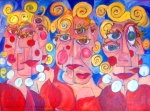
I knew he and the Ton of Fun were beyond any hope. I knew I could never un-see what I saw. I went into the other bathroom out of necessity anyway. Most people used the ladies’ room rather than the guys’ because it was cleaner and it worked. I was hoping I would begin to forget what I saw when I walked out.
The place was always an absolute dump. The bartender cashed our checks, paid our tabs, and then cheerfully poured even more happiness for the underachieving intellectuals that could have been so much more.
Like all dive bars, this place had an immortal jukebox. Ours played “House of the Rising Sun” practically non-stop. It was an appropriate song for most of the folks in there. If I hear it after I die, I’ll know where I am heading.
Another friend turned around the partition wall toward the ladies’ restroom. I shook my head as we met out side the ladies’ door and motioned for him to use the guys’ restroom. He looked at the door and then back at me. He understood not to look or ask.
“Neither of us should be here, Munks.” he said as he lit his cigarette and peeked around the partition toward the middle of the room where people were singing Christmas carols while “House of the Rising Sun” played in the background. Then he stepped into the guys’ restroom. He knew I agreed.
They bulldozed the building years ago and put up a sandwich shop or some damn thing. The bar’s location itself moved up and across the street, but where it was will always be where it is when people from 1983 think of it.
But at Christmas, it was different. At Christmastime, the bartender wore a Santa hat. Some kind of pathetic garland was wrapped around the place and some lights were always strewn up behind the bar. The girls had Christmas pins on their jackets and some had red scarves or knit hats with some kind of Christmas look. The guys totally avoided anything visibly Christmas except the mistletoe hanging in strategic spots around the bar.
I always liked Christmas.
I liked it as a small child. We had some good ones. My grandfather would go nuts and have big-assed Christmas parties that would make George Bailey have a cussing fit, throw that loose part of his staircase at that tree and just start embezzling anyway. Pappy had everything from the decorations to the lights to the green and red bow tie. I think when he died they had a job all set for him handling the Christmas parties in heaven.
High school was a blast at Christmastime. I worked in a hospital and they went all out for Christmas for the patients and employees. Drinking cold beer at high school Christmas parties while it was about 8 degrees outside made sense back then for some reason. Peppermint schnapps and laughing gas while sledding on a golf course didn’t suck either.
Our wedding was at Christmas. We got to see “Christmas Carol” on stage in San Francisco and rode the streetcars with Christmas wreaths on them. We also went to Las Vegas for Christmas a couple of times. There is absolutely nothing like Christmas in Las Vegas.
We lived in Colorado for a few Christmas seasons. A Colorado Christmas is something everyone should experience – even on “no burn” days. The little town we lived in had a Christmas parade every December. Farmers along the Front Range would decorate their barns and fences. People in the mountains went all out on their homes. There was even a huge star on a mountain behind Boulder that lit up above the city. Pearl Street Mall in Boulder is a pedestrian shopping area downtown that was a lot of fun to take small kids or to just walk around and enjoy while picking out presents and stuff. I went to college and tended bar in downtown Denver. Had my first true Christmas beer there. I enjoyed writing semester papers and painting final compositions more in the December’s than during the May’s.
Even as an artist I have enjoyed running the gallery at Christmas. Christmas openings. Great customers and patrons coming in for each Christmas’ offering each year. We’ve raised our family and provided the best Christmas celebrations for them as well as our extended relatives as we could with no regrets. Some are better than others, some are not as good as some others, but overall – I like Christmas.
Christmas has charitable components. It has the fun stuff like watching the look on little faces when they see a Santa or when something ironic like the Salvation Army getting sued because they ring their bells too loudly. There is always somebody doing something stupid with a Christmas undertone that makes it funny. There’s always a dumbass knocking over a display or vandalizing something that is just too ridiculous to not like.
Having Christmas with the kids was a blast every year. Especially when they were really little. It didn’t matter what they got or didn’t get – no one remembers the presents, but they do remember the faces. You can’t buy that. I remember telling one of the kids with a straight face he was only getting a fresh orange one year when he wanted a video game. Priceless.
Old Christmas music is a favorite of mine as well. Not that syrupy Rudolph stuff. I’m talking about the old school, late forties – early fifties narcotic-laced, improvisational, jazzy Christmas music where these yellow-eyed, hard-core types bust out some holiday magic and the only reason we know about it is because someone left a tape recorder on in some Harlem nightclub or somewhere similar about 60 years ago.
This all boils down to one concept or idea I have about Christmas: Christmas has been a way for people to express how they feel about Christmas itself. Maybe it’s making cookies or walking in the mall with the grandkids or heating up a spoon and playing some Christmas jazz in a way no one else can. It was about how to contribute to the idea of Christmas. Decorating hospitals, farms, homes, and schools for the holiday. Teasing the kids. Working on finals in college at Christmas. Putting wreaths on streetcars in San Francisco or singing Christmas songs in a dive bar with The Animals playing in the background while your friend wrestles the Ton of Fun in a crowded bathroom.
It didn’t suck. Maybe we didn’t embrace it much at the time, but it didn’t suck either.
Now it does suck sometimes. The “fiscal cliff” is the news. Stores are open on Thanksgiving. My great aunt would have a coronary at the thought of going shopping at Thanksgiving. Christmas has become a bother and juvenile for many. Other news is pushing Christmas away or at least relegating it to a way for businesses to end the year with a profit.
Black Friday? Instead of lighting up a star above a city or having a cold beer with friends on a cold night for a Christmas party or laughing about the irony some Christmases bring, or somehow doing something for someone or some people for Christmas – we are expected to go shopping so the stores can switch from red ink to black? It does suck that Christmas happens earlier and earlier in the stores each year and appears to mean less and less as well.
But I still like it. There are still some holdouts that “get” Christmas and there are still examples of people doing for others because it’s Christmas. I always think of that story in the First World War where some British and German soldiers got together for Christmas for a few hours before continuing the war the next day. Is there anything more powerful than that? Can Black Friday or new Nike’s accomplish what happened that year? When Pearl Harbor happened, it was Christmas, but it didn’t end Christmas that year. When Lennon got shot, it was Christmastime – but we had Christmas that year. When 9-11 happened, Christmas came on schedule three months later. Christmas will come this year despite what the Mayans calculated. What bothers me is there are fewer and fewer examples of Christmas working out all right. It gets minimized and mutated and revised annually. Lots of people are apathetic or feel it is cheesy and uncool to like Christmas and they want to push it around or aside.
I know there are bucket loads of excuses and reasons for such sentiment, some valid – some not, but I don’t care.
I’ll pull the door shut on what I cannot fix and just watch drunk people sing Christmas carols over “House of the Rising Sun” in a dive bar – because I do like Christmas.
I get it.
Learn more: http://nationalartistsadvocacyinstitute.wordpress.com
Perfect Storm
June 20, 2012
Recently I received an invitation from a person who covers art (an umbrella term for things artistic I suppose.) for the newspaper in the little town where I live. (I am proud to say I am not from there, but sadly, I do live there.) The invitation was to send suggestions to him regarding ideas on how to view or relate the magnificient “art weekend” there to his readers.
This kind of got the ball rolling, I suppose.
I’ve been reading some shockingly self-serving comments by artists regarding shows under the guise of some kind of protection a Facebook group might somehow provide if the membership was sealed. This group of “turks”, as my east coast friend calls them, allows very little, if any, dissent within their hallowed halls. Funny stuff, but not very savvy when it comes to giving shows a chance to improve and or clean up their act. I haven’t expressed my view very much because it is more fun to watch them wrap themselves tighter and tighter into a groupthink. It has been difficult to see so much energy and passion go – down the drain.
There has been an attempt by the owner of another art-show/artist-related website to encourage dialogue where many people have already left or claim to have left – citing either frustration with some ideas there or if not the actual writing, then the censorship that may or may not take place over there depending on one’s perspective. In addition, the comments pinned to the owner’s essay generally kowtow to the middle-of-the-road mentality that has infected the sight from people with selfish agendi. Don’t rock the boat, don’t let anyone feel like an idiot – even though they may be one. Facts is facts. She’s a friend, but the site has been taken over by agendized pseudo-artists with rose-colored glasses and a penchant for the positive – all day, every day – unless they are on that secret Facebook site, then it’s a different story.
Another website where I am fairly active and fully support (http://www.thecornerbooth.proboards.com) has put forth an interesting premise. In a nutshell, and using some round numbers here for simplicity’s sake: The idea has been put forth to consider that in order to make $100,000 a year as an artist doing shows – $10,000 at a minimum must be made at 10 shows – individually. Even if they do 20 shows a year – the magic number is $5000 at each show – at a minimum. Of course we have not addressed overhead: insurance, taxes, retirement, hotels, travel, repairs, etc. – which could easily take a third of that 100K. So, to take home $66,000 – 5K needs to come in from 20 shows each year.
That is quite a task and does give one a pause . . . something to think about when you are sitting at $1800 during a supposed 5 star show with a $500 booth fee, a $45 jury fee and 5 nights in hotels with 2 days driving each way – with only 2 hours to go and some guy wants to tell you how much he used to enjoy painting when he got back from Korea in 1962 while people walk by and thank you for “sharing your work with them this weekend” on their way to the concert with a couple of $12 beers in each hand and looking so forward to seeing those fireworks – for free!
(pssst: It’s even more fun when you are across from some supposed artist selling Chinese birdhouses – handpainted, to be sure for $19.99 and your in-laws bought six for Christmas presents this year because they are “soooooooo cute”.)
A perfect storm indeed – especially during a recession and when so many know so little about art at art fairs.
What are my suggestions for the newspaperman?
Outside of asking him to learn as much about the visual arts as he knows about things like the theater (he rocks on theater stuff) and also who is playing in what golf tournament in California – I would ask him to consider the same things I would ask of anyone involved in the art show world – either as an artist, visitor, patron, promoter, writer, or stalker at any art show in the country. These are some of my perspectives based on ten years of shows.
Some will disagree.
Some will agree.
The sun will rise tomorrow anyway.
—————————
Here they are:
Go to the show. Don’t read about it. Don’t take pictures from a helicopter. Don’t ask your friends on Monday. Go. Take a friend, take an enemy. Go.
Recognize and do not forget, even for a moment that the artists are there to sell their work – if not to you, then to someone else. It’s what we do. We make beautiful things and sell them.
Most bona fide art shows are juried. They are not free for the artists. The artists pay a jury fee and a booth fee. The fees are not cheap. The shows do not provide the individual tents. Some of the shows have large circus-type tents that are provided as a building would be provided for some “indoor” shows. But those vanilla, stamped out white tents? They are not free. The artists buy those when they start their businesses. It is a privilege to be juried into an art show. Usually 2 or 3 people were rejected for every one artist accepted.
Sometimes it is a curse to be accepted into a show. The artist rarely returns if there are too few sales – no matter how cool the concerts were or how beautiful the day was.
Some shows are shady and border on criminal. Some are outstanding. The average visitor has no way of knowing how disgustingly or wonderfully the artists are treated at some venues. This is not a reflection on the artists or the artists’ work. The purpose of a show is not the show, it is the customer. Buy the art, not the show. By the way, artists generally hate the Friday night VIP mixers that they get to decorate with their booths. It basically means an extra hotel day and three days in the booth for very little payoff. I know some disagree, but it’s my list.
Promoters and Directors: Stop asking for mandatory donations of artwork. We don’t get a tax break on anything other than the cost of materials and that raises a red flag anyway. Stop demanding. Artists can, will, and do make donations to the charities of their own choosing. Charity auctions cheapen the value of the artists’ work. Patrons please recognize the artist is truly giving of their own free will. If bidders/patrons are not sure, then please ask if the donations were freely given or were they wrung out of each accepted artist.
If you are bidding on a donated piece and you win – please don’t go running up to the artist to thank them as loudly as you possibly can because you just got a $900 painting for $23.00.
Enjoy yourself at the show. Buy a beer. Walk around. Talk to your friends with your backs to the booths, but at some point – visit the booths. Go in. Say “hi”. You don’t have to buy anything. You don’t have to tell them who you are. Believe me, they don’t care. They are just glad you came in and said “hi”. So come in, look around. Very few of us are high-pressure types. We want you to see how good our work is.
When you leave, please leave with a smile or a nod. No need to promise anything. If you have a question, please ask. If you don’t, then don’t. If you have a comment or a criticism, make it brief and please, please, please understand not one of the artists gives a damn what you think – but you are still a pretty nice person and you are welcome to re-visit anytime. If you want to leave quietly, that’s fine. It’s ok. No need to tell us you’ll “be back”. Most of the time, we already know. We already know.
Please don’t ask if we were drunk or what drugs we take when we create. It’s condescending, rude, presumptive, and insulting to a professional artist. Go ask the portfolio manager you had in 2008 instead.
When you engage an artist in a conversation about a piece and show interest in the artist’s work, you may ask for a card. If you are looking for a way out of the booth without obligating yourself, just walk out – believe me, we are glad to see you go rather than ask for a card you don’t want anyway. Newsflash: we know when you are looking for a way out of the booth without appearing cheap. We know you are not cheap, just go. It’s ok.
Free card with every purchase at my booth.
If you are looking for free entertainment, please walk in, enjoy, and then walk out of the booth quietly. If you really need to step up that need to be entertained, please enjoy one of the free events – like a stiltwalker or a fireworks show. Try watching the crowd (or lack thereof), after all – it’s what we do too.
Don’t steal.
If you are drunk or loaded. Enjoy yourself in the aisle or with the police and come back tomorrow to visit the booths.
Not one of the artists wants to see your work, or critique it, or tell you that you have talent, or hear how you had to quit painting because you just couldn’t think of what to paint. They may pretend they do, but trust me – they are there for sales.
We spent a lifetime making each piece. It took years to get to the level to make whatever it is you are looking at. Please don’t ask how long it took to make it. We have 15 timeclocks all going at once – just like you do in your profession.
If you see something you like, talk to the artist about it. Ask about it. Tell them what it means to you. Buy the work if you can afford it and you are in love with it. If not, then walk away. No hard feelings. Ask for a card at that time. We’ll know you are sincere.
If you are a newspaper writer, for the love of God, stop picking (or receiving pre-picked) artist statements and photos that look good in print. It’s old, it’s been done, it’s yesterday. It’s boring. The last thing the shows need right now is – boring.
If you feel you must bargain, realize many artists will not do so. But if you must, be prepared to state your offer and accept the counter – or don’t.
If you are in the media, a sponsor, a promoter, a visitor, whatever – recognize that the show is about the art, not the show. No sales = No artists = No visitors = No More Show. It’s always about the art and the customers.
Ask about layaway – many will work with you.
Cash is NOT a determining factor. If you are a dentist and someone offers you cash for a procedure, does that alter the price? How about at the grocery store? Try the utility company on that one.
Walk around the booths, not through them. Would you want that artist to walk through your back office on Monday?
Don’t ask us about other artists on the circuit. Chances are we know them or know of them. Chances are even greater that we don’t want to talk about them. Odds are really good we don’t like them. Name-dropping works only as an ice-breaker with us. Maybe.
As artists, we know that 93% of all dog walkers at a show are not going to buy a piece of artwork – not ever in their lifetime. We also know that 100% of the dogs will not do so. We also know that 12% will whizz in our booth and their owner will pretend nothing happened. 2% will leave a deuce on the street in front of someone’s booth and both the dog and owner will walk away. 100 % of the artists that love dogs will wince at the sight of the poor dogs trying to get in the shade while their very shallow owner ignores the dog’s burning pads on the pavement. 100% of artists that don’t love dogs will think the same thing. If you must bring Ruffie the Dog, please come barefoot so you can understand how it feels.
Artists: Do not stack your stuff out in the aisle. It’s shallow and rude. The only thing worse is confronting another artist and accusing them of plagiarism in their own booth. Douchery 101.
Please leave your monkey or your parrot or your goldfish in a fishbowl at home. Really. Leave them at home. Really.
If you must say: “Who the hell would buy that?”, say it at home or better yet, in your next therapy session where you will probably see that particular piece anyway.
Do not try to sell anything to an artist at a show. We already have a credit card purveyor. We don’t want your damn Sourcebook. Just don’t. We are there to sell, not buy. Sell.
We will probably deliver a painting or a sculpture to your home. Understand that someone knows we are going to be there and for how long. Sometimes we will even agree to let you decide on your purchase once it’s on your wall. Please be a good host and offer a soda or something, it’s been a long day. Please no haggling on your turf. Lastly, if you don’t want us in your home, don’t ask to have it brought over.
If you suspect some work may be imported junk, please tell the show staff. A good sign is the pile of Made in China boxes under a table in the booth or the Made in Mexico stickers on those yard art things.
When you walk down the aisle proudly displaying your new piece of yard art (aka: Shit on a Stick) – please know that damn near everyone from the guy who sold it to you to the kids pulling the water cart are practically having an embolism from silently laughing at you.
If you are with the media, lose the old Marketing/Newsroom delineation line. No one ever believed it. Ever. (See embolism comment above.)
Media people: we don’t need you as much as we used to because now we have the internet. So, shape up. No more “a great time was had by all” journalism. We’re not as stupid as you used to think we were.
(Signed)
Shows, Customers, Artists, and Just About Everyone Else.
Artists: stay away from my booth when I am working with my customers and please don’t tell me what to paint.
Customers: Please don’t tell me what to paint, unless you are making a custom order.
Do not ever, ever, ever follow an artist to their hotel or on the highway after a show. Ever.
Regarding awards. Take them or leave them. They are usually presented by a judge who has no business judging work that had no business winning – but not always. Buy the art, not the ribbon.
If there are two or more competing shows in your community during the same time period, please treat them all fairly as members of the media, patrons, and competing artists. It’s all so juvenile otherwise. The shows are there, they exist, they are competing. Nobody is “complementing” anything. Deal with it.
Please do not believe for even one moment that when you say “I love this, but I just don’t have ANY room in my house because of all the art I have collected.” or some variation of that sentence – that we have never heard that before. Just smile and go to the next booth. It’ll save us all the embarrassment.
Everyone: Please ask before you photograph a booth or the work of an artist inside. Just ask. If they say “Sure.” then fire away, but “no” means “no”.
Photographers walking around with the huge-lensed cameras and the correspondent’s vests: Just don’t. Leave them at home. Again, really.
Photographers: Don’t cry or complain when your camera is smashed on the pavement because you insisted on your rights to photograph original artwork when asked not to do so by the artist. Just saying.
Media, Shows, Patrons: Talk to the artists. Listen to them. Be sincere.
If you or maybe you and someone close to you come into a booth and are overcome with emotion about about a piece, tell the artist why, you’ll make his or her day.
Times may be tough for some, but as artists we refuse to participate in a recession.
Buy the art, not the show – it’s between you and the artist. It always has been and always will be.
Come to the shows, talk to the artists, have fun. Buy works of art from genuine artists this summer.
Buy real art.
Learn more: http://nationalartistsadvocacyinstitute.wordpress.com
Heartland Havens (Part I)
June 14, 2012
“What the hell?”
The Colonel stepped out of the shack and looked across the dusty yard toward the commotion. 6 o’clock and the dust was already shaking off the joke of a morning dew to swirl around the yard by the barn. He took a long pull off the earthenware jug and swished the bourbon around his gums before spitting over the rail. The sun was not far off the horizon and it already seemed to be an unforgiving kind of day. He squinted toward the henhouse and saw his assistant gliding on a Segway and a plume of dust from behind the outbuildings over in what they call “No Man’s Land” there on the farm. It was an area that only the new people were placed, until they earned their place in the system. He saw a larger cloud behind the Segway and wondered just what in the hell could be going on now.
“What the hell?”
The Colonel considered hopping in his golf cart to investigate what the hell his assistant was doing now, but in the end decided to set back in his good ol’ rocking chair and call his stiltwalker out to handle things.
“Stretch!”
No answer.
“Stretch goddammit! Get over here!”
Stretch the Stiltwalker stepped around the side of the house and looked down at the Colonel. Hands on his hips and smiling, he asked the Colonel if he was enjoying himself today, etc., etc.
The Colonel listened to Stretch for a minute or two in aghast amazement and then waved his hand to silence the stiltwalker. He sent him a little further out in the yard to see what in the hell was chasing his assistant who was incidentally riding the Segway.
“What the hell is that, Colonel?” Stretch asked.
“Not sure.” The Colonel wiped his brow with one of the twenty’s he had inside his straw hat.
“Well, Colonel . . .” Stretch said as he shaded his eyes and looked over toward “No Man’s Land”.
“What?”
“I can see from here, Colonel.” drawled the Stiltwalker.
“See what?”
“It appears to be – appears to be . . .”
“Appears to be what?”
The Stiltwalker turned and looked down toward the Colonel.
The Colonel looked up at Stretch.
“Well!”
“Colonel, that appears to be a flock or herd of chickens – hens, it seems!”
“How many? We only have room for 170.”
“Including the waitlist?”
The Colonel looked out toward the commotion and suddenly burst out laughing.
“Including the waitlist, – that’s a good one Stretch!!!”
Stretch laughed nervously until the Colonel asked for a head count.
“I’m going to guess over 500 Colonel!”
“500 you say – wow!”
The Colonel kept watching the dust and commotion. “This is going to be a blast, eh Stretch?”
Stretch nodded.
“Do you think they all got together in the last month, Stretch?” asked the Colonel
“Not sure, Colonel.”
“Aw, hell, no cares about that kind of stuff anyway.” The Colonel looked down at the little robot butler-thing next to his rocker. “Fetch me another jug, you little creepy thing.”
The contraption just stood there. No movement.
“Damn thing is worthless, isn’t it Stretch?”
“Yep. Kind of a Frankenstein kinda thing. You want me to ask the Evening Clown to have it added to tonight’s pyro show?”
The Colonel kept watching the commotion in the yard. “Nah. Let’s see what’s going on here with all these damned hens first.”
The Morning Clown watched through the tear in his show tent. He heard everything and could see the commotion. He saw the little volunteer kids starting to pull their water cart around the walkway. He looked away from the volunteer kids back to the noise. He knew what was coming from that ruckus and he didn’t want the kids to see the tear running down his cheek. His job was to chalk out the booths for the day, he had to stay focused, nothing more. He turned and reached for his “Art Carnie” hat.
“Sure is hot.” he murmured to himself.
-End Part I-
————————————
Learn more: http://nationalartistsadvocacyinstitute.wordpress.com
Bitchslapped
June 9, 2012
It’s been a busy recession.
The banks aren’t letting go of any money and neither are the regular folks. The poor have always been poor. The recently poor were really never that rich anyway and the newly rich are few and far too “nouveau”. The rich are still rich, but they want to look poor while the poor want to look rich by doing the things the rich do, when they are poor. So to speak.
It’s now an election year and everyone’s waiting to see which of the two most deserving, most qualified, wisest, and so forth get the nod to be President – which means nothing with the worst Congress in history and the country about as divided as anytime since the Civil War. Speaking as an artist trying to sell things people do not need to people who are unable or unwilling to buy them, isn’t all this just peachy?
More importantly, what’s our hero been up to lately? We haven’t seen or heard much from him. Some people celebrate this scarcity, some lament it, and certainly most could not care less.
But we’re all here together in this anyway – so, let’s take a look. Yep, there he is walking down the street. Sun beating down on him like a sales tax audit, and yet he step-slides along in a pollen and Benadryl fog. The recession hasn’t claimed him yet and probably won’t either. It looks like he’s walking from the auto repair place – probably heading back to get the other car, but wait – is he heading into the little corner bar? Yep. Looks like he’s stopping in for a bit – let’s take a look inside and see . . .
—————————————————————————————————
“Oh great,” I thought when I saw her slap the hell out of the bartender.
“Nanna! Stop hitting him!” I walked up to the bar and lifted her up by the shoulders and pulled her away from the poor bastard.
“He’s a son-of-a-biiitch”, she muttered through clenched teeth as I barely held her away from another felony conviction.
“Nanna, you really need to calm down. Your eye is all messed up and it looks like it’s gonna float away.
“So?”
“So?” I replied.
“So?” she said back – and so forth for a few more exchanges before we started laughing.
“Fix your eye, Nanna – you look like a grasshopper or a fish or something.
Still chuckling, she popped her glass eye out and wiped it clean on her house dress before popping it back in. She checked her handiwork in the mirror before scowling at the bartender.
“What did he do, Nanna?” I asked.
“He’s a son-of-a-bitch,” she answered while glaring at him with clenched fists..
“All I said was we don’t open until 5.” said the bartender.
“I tell you what,” I said as I gave Nanna the up-down look to make sure she was ok. “How about a couple of shots of Patron and we’ll forget the whole thing?”
The bartender rubbed his face, “Your granny bitchslapped the hell out of me!”.
I let a few seconds go by, “First of all, she’s not my granny, she’s Nanna”.
“What the hell is a Nanna?” he snapped back – “she’s nuts!”.
I could feel her muscles tighten up from where I was sitting and I heard the all too familiar low growl rise up in her throat as she stared at the bartender. “I’ll do it again too, you no good rotten son of a . . .”
“. . . and a couple of soda backs too?” I interrupted.
We all stared each other down for the next few seconds. “Okay, fine!” said the bartender as he threw up his hands and went back behind the bar.
“I got my eye on you, bitch!” Nanna announced as the bartender poured the shots. She took out her eye again, pointed at it and pointed back to the bartender several times.
The bartender looked at me, “What the hell? Why?”
“Who knows? I am sorry about all this. We’ll keep quiet while you set up for tonight.”
Nanna popped her eye back in and hopped up on the barstool.
“What’s new?”
“Nothing much, I’ve been pretty busy Nanna.”
“Shows are starting up?”
“Yes and no. I’m trying to stay close to the studio, cut down on traveling and hotels and stuff.”
The bartender brought us our shots of Patron with a salt shaker and some lime wedges. Nanna took the wedges and threw them at the bartender as he stepped away. I dropped the salt shaker into the sink under the bar.
“People don’t like your work? Tell me who, I’ll kill them for you and be right back.”
“No, they like the work Nanna, people are just hesitant to spend very much money these days.”
“Bull.”
“Seriously Nanna, people are holding on to their money and taking longer to make decisions.
“Bull.”
I held up my shot. “It’s true Nanna.”
“Bull. There’s lots of buying going on. Tablet computers, phones, alcohol, lots of stuff. Drugs too. Lots of the legal and illegal marijuana around too. TV’s, DVD’s, lots of stuff.”
We did our shots, I waited for her to reach for her soda water before I did.
“What are you saying, Nanna?”
“They’re not buying as much at the shows? I think there is something more to this than just blaming it on the economy.”
“Sales seem down, that’s what seems to be the trend lately – by and large. I’m selling, but not like I used to, and more importantly people are not happy out there.”
“You think the recession hit the art shows that hard?”
“What else could it be?”
The bartender had his elbows on the bar with his chin in his hands as he listened. “What things are different at the shows?” he asked.
Nanna flinched at him but he didn’t move. Impressive.
“I suppose there has been an effort to bring more people to many of the shows.” I said to them. “The ones that can afford it are hiring entertainment or consultants or partnering with other events to bring in the bodies. It all looks good on photo opportunities. Good for more applicants each year.”
The bartender shifted his weight, “What is that doing?”
Nanna pointed at the bartender with raised eyebrows and then motioned back to our glasses. The bartender nodded and turned to grab the Patron bottle while talking, “Is that having an effect?”
I thought for a minute. “It does bring in bodies, but does not seem to bring in buyers for most people. It seems to be creating a nice place for people to socialize, the buying seems to be really taking a hit.
“For everyone?” Nanna asked.
“No, not for everyone, but I do not know of any artist on the circuit that has not taken a hit or two in the last few years.
Nanna thought for a minute, Well, if they are bringing people to the show – then you must be at least getting a gate fee portion . . .
“No gate fee at most of the them, Nanna. Besides no shows, not even the big shows that have a gate fee ever share a portion of the gate with the artists.”
The bartender spoke up, “OK, so no gate fee. You can’t be out that much money – gas for travel and a hotel night or two. That can add up, but should be absorbed by sales – just a nut to cover.”
“Well, yes – but there is the booth fee.”
Nanna and the bartender looked at me quizzically.
“Booth fee?” they both said at the same time.
“Well yes, you pay a booth fee as a type of “rent” for the privilege of selling at the show.”
Nanna and the bartender looked at each other and then back at me.
“Of course, don’t forget the jury fee?” I said.
“Of course” they both said. “What is a jury fee?”
“Well, when you apply, you send in a non-refundable jury fee and once accepted you are asked to submit your booth fee.”
“And if you are are not accepted, you just lose that money?”
“Well, yes.” I said.
Both of them were staring at me intently.
“What? What’s the matter?”
Nanna asked very quietly, “So, you pay money to be considered. If not accepted, you lose that money. If accepted, then you get invoiced for the booth fee, which is payment for the opportunity to sell at the show.”
“Yep, that’s about right.”
“And the shows continue to provide distractions to attract people and put on a festive atmosphere. Sometimes beer and concerts. Sometimes a party with wine tasting and maybe dancing. Sometimes fireworks, stiltwalkers, performance painters, and even clowns – apparently in an attempt to bring people into the show with out any kind of prejudice for the artists – do these guys that are not artists have to pay?”
“I am not sure, but I think they get paid if they are not volunteers.”
The bartender and Nanna simply stared at me. The bartender raised his eyebrows at her and she rolled her eye at him.
“What kind of artwork is at the shows – typically what does someone see at an art show nowadays?” asked the bartender as he got out a third glass.
“Oh, all kinds of things from the really kitschy, tacky, crafty crap you see at just about any craft show, to some cheap junk made in China or maybe Mexico and sold by a vendor who claims or infers that he or she is the artist, to assembly-line stuff made in a production studio and sold by professional salespeople, to some mediocre art made by a developing artist to some really good work done by an experienced artist – and everything in between.”
The bartender poured three shots. “Go on.”
“Well nothing much more to say other than there does seem to be a lot more junk at the shows. Every show I go to seems to have at least one guy with a line of about 7 different things he is selling. Some people sell printouts of peoples’ grandkids’ names off a laptop and a printer in their booth for $20. Some painters are selling a boothful of paintings that seem to be painted by 6 different painters. Some photographers are selling the same tired, old, alphabet letters to people to spell their kids’ names. One guy last week was selling an opportunity to have your photograph of your choice printed on a real canvas – all you have to do is pay him and send the jpg file in and pay for the shipping to get your new painting/photograph in the mail. A friend of mine recently wrote in her blog that some people are just into making a quick buck on the circuit because it looks easier than it really is when doing shows.”
Nanna waved me off. “So you are saying there is some really low end stuff at these damn things where you actually pay a jury fee, a booth fee, you pay to make your painting, you think, design, draw, make, revise, revise again, and finish your painting, pay for gas and then you transport, set up, and display the painting at the show, you conduct the sale, collect (and remit) the sales tax for the appropriate jurisdiction, and wrap and/or deliver the painting – all while competing with bottomfeeders that should be allowed to (of course) sell their wares some where, but nonetheless are for some reason juried into the same show as artists – all for a pool of attendees that may or may not be customers, but are in all likelihood slack-jawed locals who do not understand that you are running a business but instead think you are the day’s entertainment for them to taunt, test, and tease you when you are actually trying to sell your work and stay innovative and fresh at the same time?”
I nodded.
Nanna continued, “And you don’t get a cut of the gate, probably have to deal with loud bands, newspaper hawkers, sample hawkers, and drunk customers stumbling around in your booth lamenting that they always wanted to “make some arts and crafts”.
“Sometimes.”
“You’re a dumbass.” she quipped.
The bartender added, “And you are seeing fewer buyers and more people walking their dogs, visiting with their friends, or “just looking”?
“Yep. Sometimes. We also get people taking pictures of artwork so they can go home and copy it or print it or whatever.”
Nanna pushed on, “And you get those lousy neighbors every once in a while who set up in your space, push their crap out into the aisle and block traffic?”
“Yes.” I sighed.
The bartender went on, “And you are noticing smaller crowds. Fewer buyers. Higher costs. Lower returns on your investments.”
“Yes, some shows are better and worse than others, but they are all prone to be tricked or they even just openly allow some of this stuff to happen.”
The bartender spoke up, “That’s because they are not taking a risk. They have the funds from everyone already. All they need to do is make sure there is a crowd and then they did their part. The rest is up to you, the vendor, artist, crafter, – whatever. They have their money already and have no vested interest in changing anything. In the short-term, having manipulative vendors that are not artists in an art show isn’t measurable. In the long-term it provides the beginning of a long death. The show starts to slip, the customers quit buying, and the process continues until the show is taken over by someone that knows how to run an art show, or it dies.”
I nodded.
“The risk is yours, not theirs.” The bartender continued.
“You know,” I said as we all held up our glasses, “there was a review of an art show meant to be a fundraiser for an art school in San Antonio recently. It was written by one of the judges of the show and it was fairly well-written piece. The odd thing was the feedback note written to address the review. The note was written by a director at the school and it was basically a disclaimer indicating the work at the show is not indicative and not the caliber of the work put forth by the students at the school.”
They both looked confused, so I elaborated.
“Basically the director was saying their students’ work is of a higher quality than the work at the show raising funds for the school. Many people interpreted the remark as a slam, an insult to the people doing the show.”
The bartender poured another shot all the way around.
“I think the director was probably right.”
“Why?” Nanna asked as we did our shots and set down our glasses.
“Because I have seen many, many shows. I’ve seen the stuff made from kits, the imported crap, the cheap knock-offs, the “handmade” whatever the hell. The recipes, the “just add water” dips, the aluminum can airplanes, the wood roses, the lousy photography, the xeroxed paintings, the organic soaps, all that stuff.”
“People like that stuff.” slurred the bartender.
Nanna slapped the bartender and was prepared to do so again as soon as he stood up again.
“Not at an art show you idiot.” she said as she wagged her finger at him.
“You’re right, Nanna. That stuff has a place, but just not at a true art show. The sad truth is, the shows are degenerating, downsizing, shrinking, and sinking. When the crap shows up, then the show starts to die because the people are not impressed and they stop coming. When the people stop coming, the artists stop coming. The shows stoop to take what vendors they can, and the people continued to stop coming because they don’t expect to see crap at an art show, but once it becomes apparent, then there is no reason to attend.”
The bartender rubbed his red cheek as I continued, “That’s what I think the director at the Texas school was trying to say. It got a bunch of people worked up, but I think the director was talking about the junk that was probably at that show (like most shows) and wanted people to understand the fact that the school will not teach students to make and sell garbage. Instead of thinking it through, I think people immediately went into attack mode because they were offended when in fact they misinterpreted what was being said.
Nanna motioned for another round. “So what are you dumbassed artists going to do? You pay, pay, pay, pay some more, and then stand around and bitch at those shows. What are you going to do about it?”
“I used to just vote with my dollars. Then I thought I’d write a bit about it. It doesn’t seem to matter. Nothing will happen until more of us come to our senses and hold the shows accountable for a quality standard – something above the system that is not currently working and really never has. Maybe more photos of the shows, more videos, maybe the TMZ approach will effect some change. The shows need to be blacklisted, not the artists. The shows need to clean up their act, get rid of the crap – if they want to be a genuine art show. We need art shows to return, not circuses, not mega-events, not “something for everyone” festivals – art shows – plain and simple. Art. Nothing more. Shows focused on art and the people that love (and buy) art. Mega-circus events can of course still happen and probably should – just not with artists. Someone else should decorate their events for free. ”
The bartender set up the next round.
“What do you want?” Nanna asked.
I took my shot with the others and sipped the soda water. “I don’t want them, the patrons, to shy away from shows, from my booth, from any artist’s booth. I am tired of setting up original work all morning and watching some buy/sell chick show up 8 minutes before the show starts, set up an EZ-UP with no weights, opens up her card table and covers it with a K-Mart tablecloth before putting all her merch on the table for customers to buzz around for 2 days. I want real art patrons to come to real art shows. I do not want to decorate any more concert venues or summertime festivals. I don’t want to talk art theory with the village idiot because no one in the village will talk to him anymore. I don’t want to bring all my work to a venue to have people walk past it double time because they are stampeding for a corndog and a lemon ice . . .”
Then Nanna slapped me.
She “bitchslapped” me really good. The sting was an eye-opener.
“What do you really want?” she asked again while pointing out to the readers. “Tell them.”
“I love painting, I love what my work does for people. I want to continue to make money selling art, genuine original art – paintings – to my customers. I want all artists at the shows to make money. I am tired of the current system stacked against the genuine artist. I want to interact with my patrons, I want my neighbors to be artists. I want my patrons to be at the shows for art, maybe not my work, but the work of another artist. I want art and artists to be the sole, the only focus of the show. No fireworks, no parades, no side shows, get rid of the politics and the people that love them. I love selling art to people that love buying art and we need to return to art shows, that’s what I want.”
We all raised our glasses for all the authentic artists out there this summer trying to really make it happen.
What a huge challenge.
Epilogue
“What else do you want?” asked the bartender as he finished setting up for the evening and Nanna already left for her self defense class. He pointed to the readers. “They’re right there.”
“I really want an opportunity to address the Zapp conference in Chicago on September 6th.”
“Really?”
“Yes, really.”
————————————
Learn more: http://nationalartistsadvocacyinstitute.wordpress.com
Art is Not Dead
February 22, 2012
I read another post today with the same message I’ve been hearing and reading lately: Art is dead.
It was written by another artist frustrated with the current situation with art shows and buyers. I’ve heard the same message in different voices and permutations for a few years now. Art is dead. Destroyed. Sidelined. An unnecessary extravagance. Many artists won’t speak up because they fear losing opportunities to sell less to fewer people in the sanctioned, expensive, and entitled shows that are really not much more than a street fair.
Some say art is a “product”, some say because it’s a product, it’s dead. Some say art has degenerated into cheap, kitschy imported garbage that people surround at the fairs. It’s probably all true, but it still does not translate into the demise of art.
“Art is dead?”
Art is by no means dead. Art was happening in the caves in France when hairy armpits were all the rage simply by default and French fashion depended on what walked by the cave a couple of days earlier. Art was happening in the Dark Ages to celebrate religion and lead the masses to a better afterlife. Art was happening in Europe when tuberculosis and syphilis were more common than anyone knowing anyone else over age 45.
And not in just Europe. Art has been happening in every continent and in every society that has existed. The Mongols decorated their saddles. The Japanese were unrivaled in ceramics. In North America there were paintings on animal skins. Architecture in South America. Carvings in the arctic. Calligraphy in China. Drawings in India. African sculptures and tools. The American Southwest is full of art from and by aboriginal and Spanish influences.
In every society throughout history, there has been some smart-ass who saw something to draw or paint or make and did so. More importantly, there was an audience of people who saw the results and were impressed in some manner and either assimilated or ridiculed the art.
There was art in the Soviet Union. There was art in the concentration camps. There was art in the American South before, during, and after the civil rights upheavals in the 1950′s and 60′s. There’s art where the towers used to be. There’s art in that field in Pennsylvania. There’s art in South Africa and Ireland. There is art in the Middle East. I remember some of the homemade tattoos the kids did for each other when I worked in a psychiatric hospital with teens. One of the kids was really, really good at making the coolest little bunny and birdie sculptures. (Don’t ask.)
Art is alive in many, many places much worse than where we as festival artists travel, exhibit, and sell. Some art is very good, some very bad. That’s what makes art, art.
What is the problem here? Some shows have determined that they can make a lot of money putting on shows. Great. But that’s not a problem.
The problem is they are not doing a very good job of picking artists, bringing in buyers, focusing on art, and making their fair share of the profits. Are all of them doing that? Absolutely not. Are most of them doing that? I really do not think so. I think it is a distinct minority of people behind a curtain that need to either work more effectively with artists – or go out of business. Darwin is king in the art world. The fittest survive, not the most connected.
Most – the majority of the art show committees and directors out there are hard-working and honest. Many are like deer in the headlights when it comes to art, but they are not evil or rotten. Even the “bad” and “greedy” promoters are just simply doing what they have been getting away with for years and they have no reason to alter a behavior that was not addressed or questioned before. Now they are pissed and they should be. We should have spoken up earlier – we are the artists and the patrons have been telling us what is wrong.
I am against a union for artists, because I do not think there are very many true artists out there and I think a union as a solution to the current issues facing show artists is a situation where the cure would be worse than the disease. I think most of the people in the art shows are not artists and are worse than the worst promoters – I do not want to unleash them onto our industry. No, the promoters need to do what they do and they need to do it more efficiently, openly, and effectively.
As far as the “artists” are concerned, I think they should either go get “day jobs” if they are simply functioning as merchants, importers, crafters, and posers. The people that matter – the art collectors, patrons and afficionados are the ones who should be weeding out this industry. They have been voting with their dollars for some time now. Artists know who they are. They have to look in the mirror each and every day and know they are an artist.
Either the shows will improve or they will die. Either the artists will get more savvy or they will be doing something else. But, there will always be artists. We’ll figure something out. We have the internet, we have an ability to sell our work anywhere we want in this country (because we don’t have unions or guilds) we have galleries, we have impromptu “outlaw” shows, we have free-will and choices and risk.
The shows do not have the power in the long run.
The artists do.
The most responsible thing a true artist can do is two-fold: become a better, smarter, more influential artist AND encourage the market – the patrons to determine where the art market is going to go. It’s really no different than the caves in France. No union, no show director, no critic, no chamber of commerce show, no government – nothing – will determine where art will go.
Quit bitching. They had art in concentration camps and gulags. We can make this work again in this country.
Art is not dead, it’s just waiting for the artists to wake up and be artists.
Learn more: http://nationalartistsadvocacyinstitute.wordpress.com
—————-
“Acerbic Diatribes” now on Kindle on Amazon.com with 5 essays not available on the instudiowithjohnstillmunks site. $2.99 and it downloads in about a minute. Bring your Kindle to the next show and I’ll sign it for you!

 In Studio with John Stillmunks